Beauport
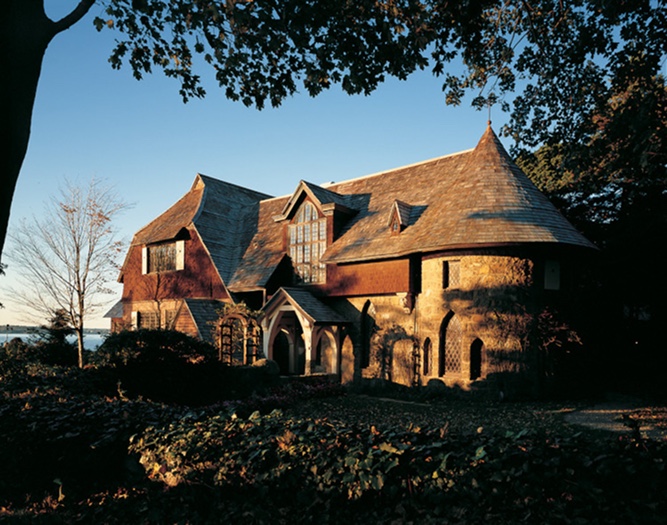
Beauport, the masterwork of interior decorator Henry Davis Sleeper (1878-1934), is often described as a “magical” place.
Built in 1908 as a modest seaside retreat, Sleeper’s Gloucester, Massachusetts, home mushroomed by the 1920s into a forty-six-room maze whose scale, color, historical themes, and humor lend it a fairy tale quality.
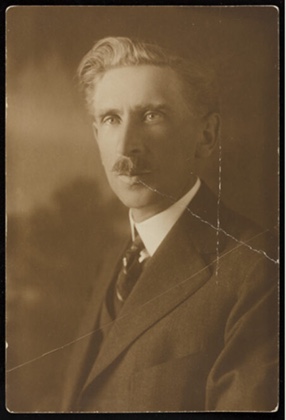
The secret to the magic was love. Sleeper surrounded himself on Eastern Point with a community of colorful, artistic, and devoted friends, at the center of which stood economist A. Piatt Andrew (1873-1936).
Henry Davis Sleeper
Wallace Bryant (1870–1953)
1906
Oil on canvas
Gift of Steven Sleeper, 1941.1703
Wallace Bryant painted Sleeper’s portrait soon after the designer met Piatt Andrew. The work’s unusual horizontal format places equal emphasis on Sleeper and the gleaming vase beside him, creating a double-portrait of collector and collection.
The Development of Eastern Point
Gloucester Harbor
The Eastern Point summer colony, situated on a narrow, picturesque peninsula alongside Gloucester Harbor, was nearly twenty years old by the time of Henry Davis Sleeper’s arrival.
On August 13, 1907, Sleeper bought Lot 101 from George Stacy, developer of the Colonial Arms. The fact that such a choice harbor-side lot remained available was likely due, in part, to its uncomfortable proximity to Stacy’s sprawling hotel. Yet for Sleeper the location could not have been more desirable.
Take a Virtual Tour of Beauport
Click the PLAY button to begin your visit. Start exploring by clicking in the direction you want to go or skip around by clicking on the circles on the ground. To look around a space, simply click, hold, and drag in any direction.
Navigate quickly between rooms and floors using the icons found in the lower left corner.
Curator’s View
First Floor Plan of Beauport
Halfdan M. Hanson (1884-1952)
Gloucester, Massachusetts; 1925
Paper and ink
Gift of Constance McCann Betts, Helena Woolworth Guest, and Fraiser W. McCann, 1942.2153
Architect Halfdan M. Hanson (1884-1952) prepared this plan of Beauport’s first floor in 1925, once the home had reached its approximate present size. Trained as a carpenter and woodcarver, the Norwegian native built Sleeper’s 1908 house and continued to oversee its expansion until the designer’s death in 1934.
Writing Sleeper in 1921, Hanson reminisced:
“It makes quite an interesting affair when you… look back over the various circumstances associated with each particular addition and renovation as they in turn took place from year to year…. It does not seem possible to duplicate again anywhere, Little Beauport.”