
Shoes have always been more than protective coverings that help us navigate the world. Footwear can be a functional work of art that helps us express who we are. The objects in this section speak to the range of creativity and hand-crafting skills that elevate a simple shoe into something more. Designed using stunning textiles, intricate adornment, unique forms, and striking color and texture combinations, these shoes become wearable sculptures.
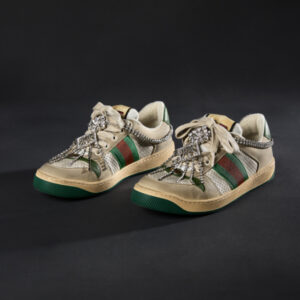
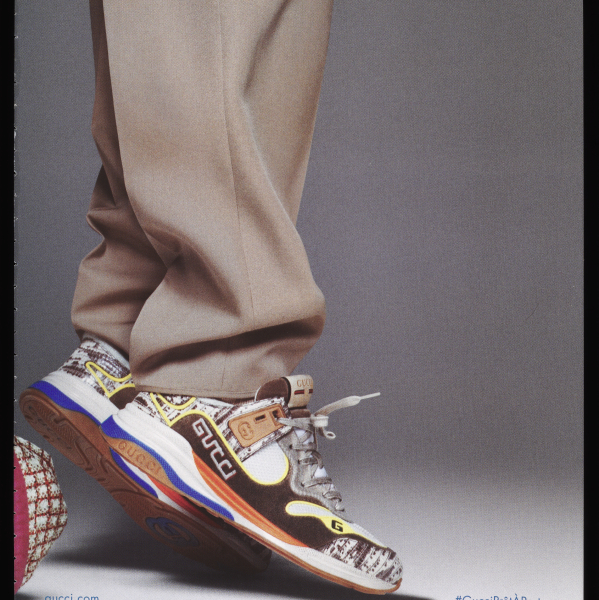
The shoe story you see here begins with a pair of handcrafted eighteenth-century New England shoes made from flower-adorned silk. It ends in the present day, with a pair of rhinestone-adorned Gucci sneakers that intentionally blur the line between high style and function. Although fashion trends, materials, and shoemaking techniques have changed dramatically in the three centuries represented here, the desire to adorn one’s feet with dazzling shoes remains.
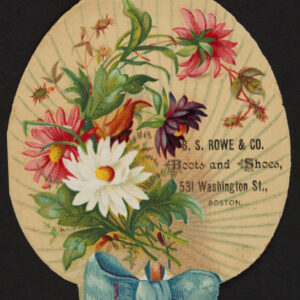
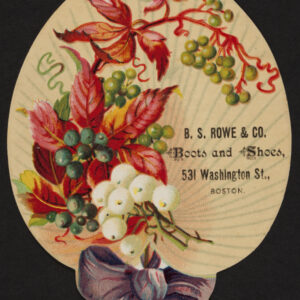
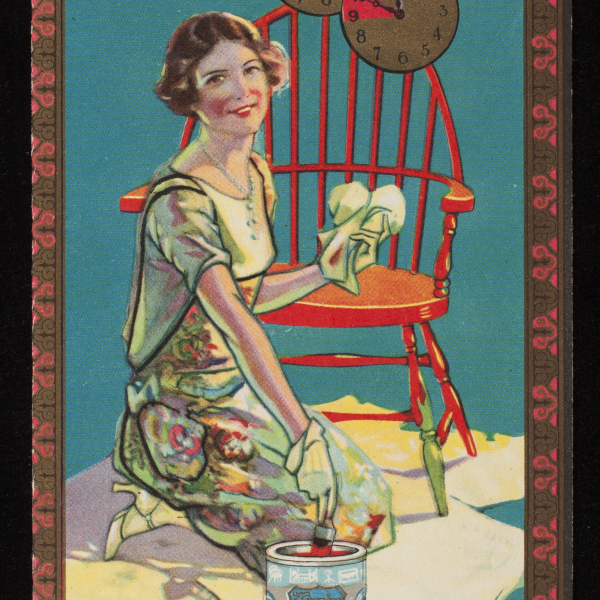
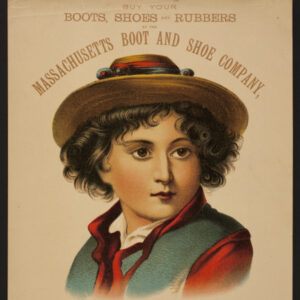
Footwear also inspired the innovative and artful materials used to sell shoes throughout the nineteenth and twentieth centuries. Works of art in their own right, these trade cards, advertisements, and prints capture the appeal of the colorful, and often whimsical, methods of promoting New England shoemakers and retailers.
Fashion through the Decades
Shoe Stories includes footwear from the eighteenth century until today. Click on each era to see a pair of shoes from that time. Which one would you wear?
- 1770-1790
- 1800-1820
- 1830-1840
- 1855-1865
- 1885-1895
- 1890-1900
- 1910-1920
- 1920-1930
- 1935-1945
- 1955-1965
- 1980-1990
- 1990-2000
- 2010-2020
- 2020 – present
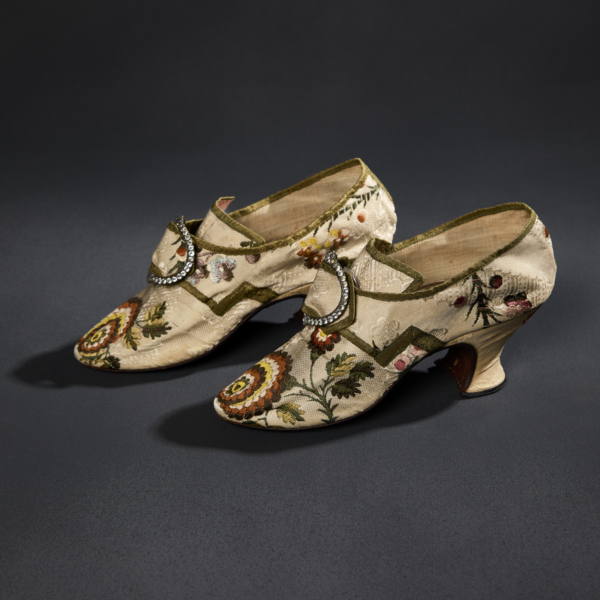
1770-1790
These shoes are representative of the silhouette and materials of footwear worn by the wealthiest colonists in North America at this time. With an almond-shaped toe, a Louis-style heel, and made of perfectly matching expensive silk brocade, these were incredibly stylish. However, other elements, such as the tab and buckle front closure, the lack of a proper left or right shoe (also known as straight-last or single-last), and the construction methods, would have been found in shoes worn across the socio-economic spectrum.
Shoes, Jonathan Hose & Son (1730-79), London, England, ca. 1770. Silk brocade, wood, leather. Gift of Miss Mary C. Wheelwright.
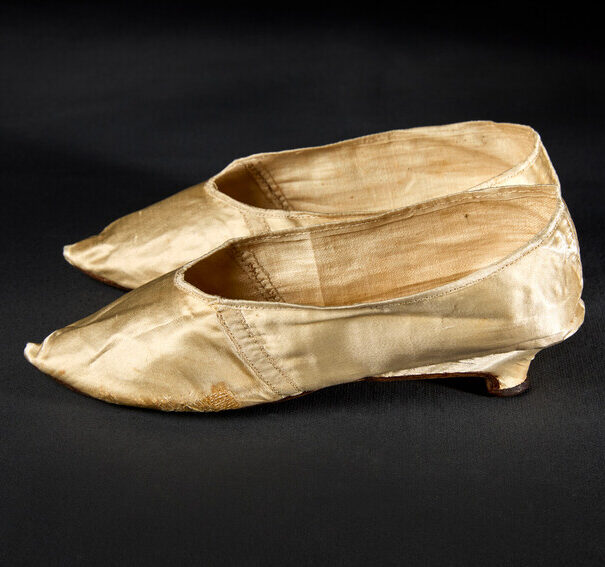
1800-1820
Here you see how women’s evening slippers have changed to a lower profile, with little to no heel. They also feature a pointed toe and usually plain silks and leathers, or small patterns like stripes or dots. These changes were also reflected in the clothing of the era, which looked to ancient Greece and Rome, hoping to materially manifest the ideals of democratic republics through dress.
Shoes, I. Burrill (eighteenth to nineteenth centuries), Lynn, Massachusetts, 1790-1800. Silk, wood, leather, cotton. Estate of Miss Frances Greely Stevenson.
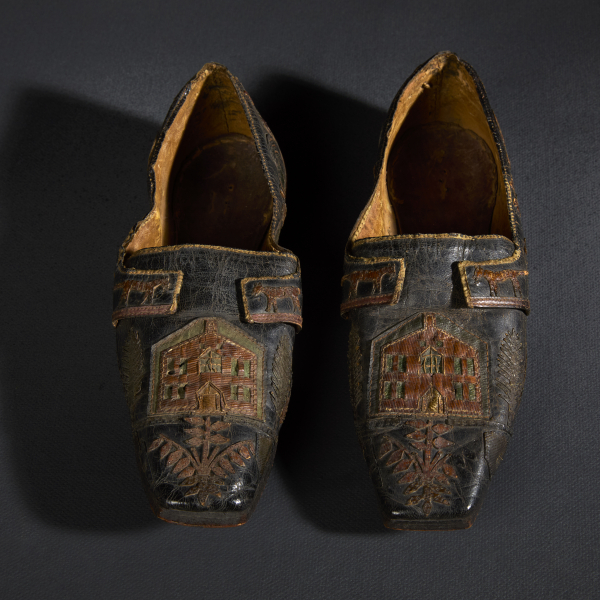
1830-1840
After the 1790s, Men primarily adopted various styles of dark leather shoes, only having a heel when needed for riding or sporting. Though highly ornamental and specially made for his wedding, the overall silhouette, construction methods, and materials are true to the period.
Men’s Wedding Shoes, Likely Samuel Phillips (1799-1859), Haverhill, Massachusetts, ca. 1830. Leather, cotton, horsehair. Buttonwoods Museum.
1855-1865
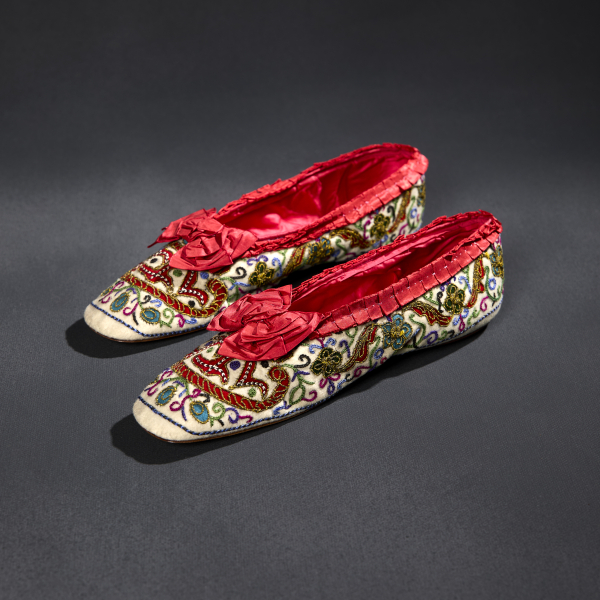
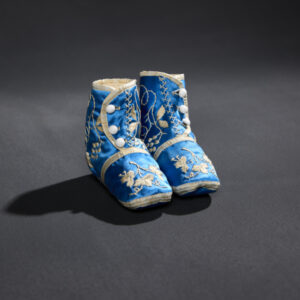
The mid-nineteenth century saw a boom in types of brightly colored slippers adorned with needlework for men and women alike. Still made with no proper left or right shoes (also known as single-last or straight-last), these slippers were not made for everyday wear outside of the home. Slippers like this could be worn by women and children at dances or while spending time indoors at home. They are often made of wool, silk, and sometimes metallic thread with thin, soft leather soles. Some were even made at home for loved ones via crafting kits.
Slippers, Unknown, North America or Europe, 1855-65. Wool, silk, cotton, metallic thread. Gift of Mrs. Samuel Hammond.
1885-1895
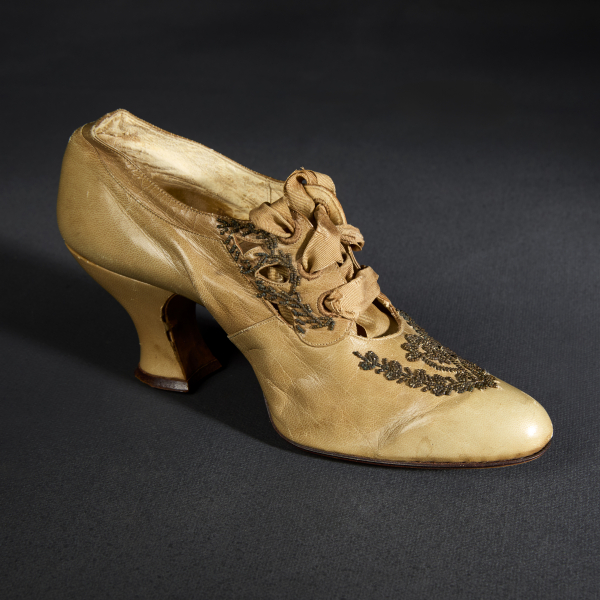
Looking back to silhouettes of the 1770s-90s, women’s shoes in the last decades of the nineteenth century returned to the Louis-style heel and rounded or almond-shaped toe. Now, however, they had higher heels, lace or button closures, and were regularly made with proper left and proper right profiles. With the rapid expansion of the footwear industry and the relative ease of acquiring fashionable and useful shoes, women of all socio-economic classes began adopting the same silhouettes; the wealth difference became reflected in branding, materials, and ornamentation.
Shoe, Charles K. Fox, Inc. (ca. 1885-1930), Haverhill, Massachusetts, ca. 1900. Leather, silk, wood, cotton, steel. Jimmy Raye Collection.
1890-1900
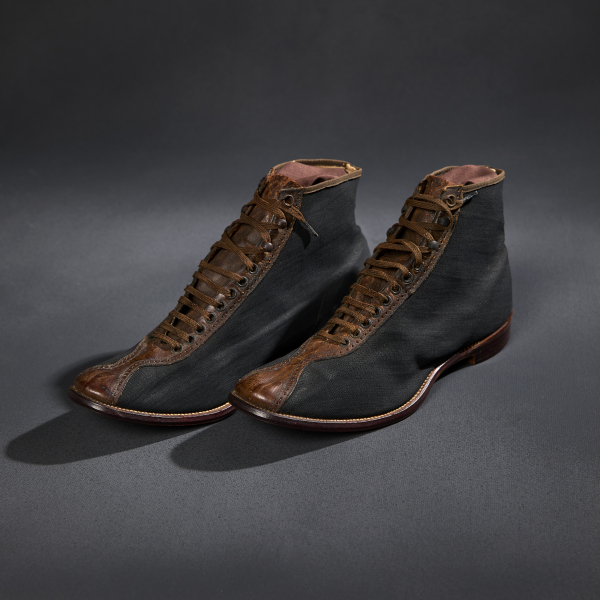
These are examples of the wider range of specialized footwear available during the first decades of the twentieth century. These shoes were made specifically for men and women who rode bicycles. The high top protected the wearer’s ankles from the chain and other mechanical components that could be dangerous to catch while riding.
Cycling Shoes, Rice & Hutchins (1866-1929), Massachusetts, 1890-1900. Canvas, leather, cotton. Gift of Josephine Richardson.
1910-1920
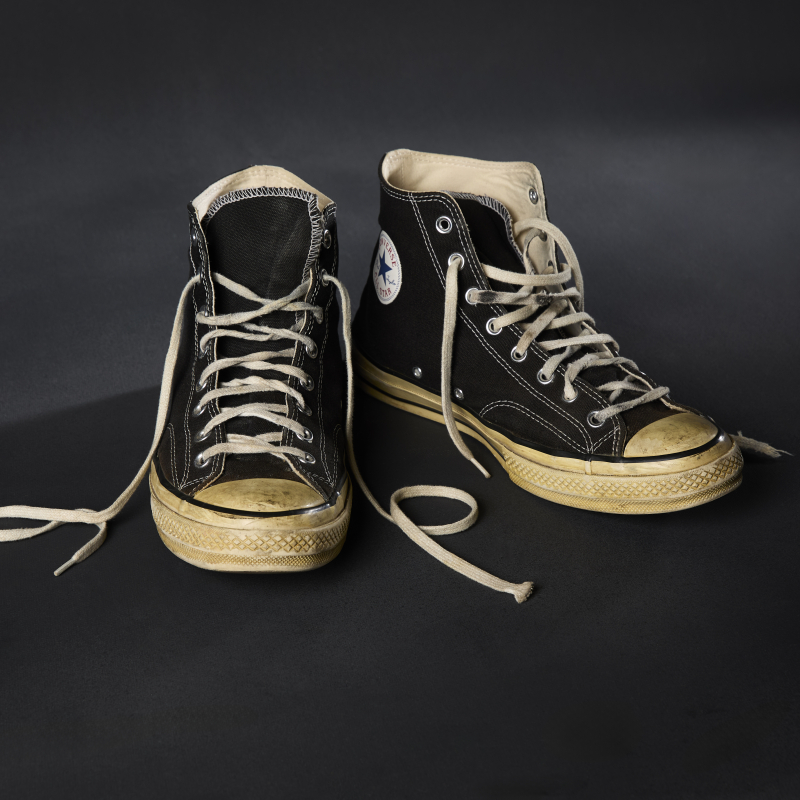
This decade saw some of the earliest modern rubber athletic shoes, including the first basketball shoes by Converse. While the sneakers in this picture were manufactured around 2015, the style of Chuck Taylor All Star Sneakers (commonly known as “Chucks”) has changed very little since the company began manufacturing them in 1908.
Chuck Taylor All Star Sneakers, Converse, Inc. (founded 1908), Boston, Massachusetts, ca. 2015. Cotton, metal, rubber, canvas. Gift of Adam Osgood.
1920-1930
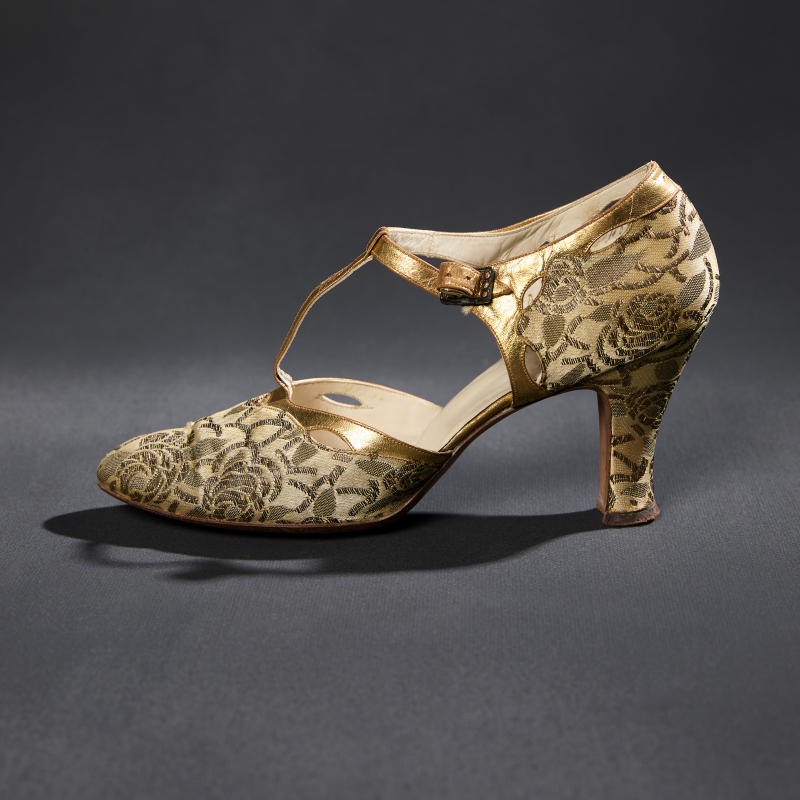
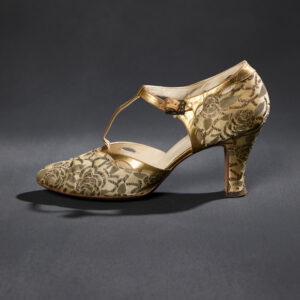
As women’s dress hems rose in the decade following World War One, shoes became particularly decorative. Also, the so-called “t-strap” was introduced to help secure the shoe to women’s feet while on the go or dancing the night away.
Evening Slippers, Thayer McNeil Company (ca. 1860-1960), United States, 1928. Silk brocade, metallic thread, leather, wood, metal. Estate of Pauline Condon.
1935-1945
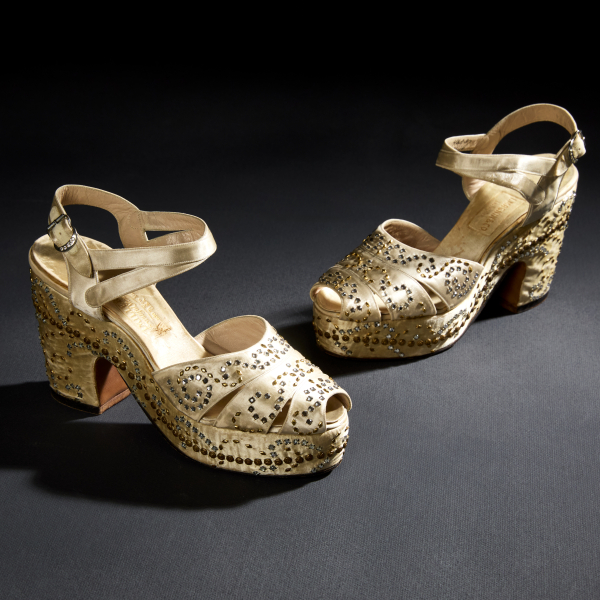
The influence of Hollywood cannot be overstated in this era as we begin to see thick platforms, sandals, peep-toes, and more, all influenced by the styles of film sirens in California. While these would not be the shoes one wore every day, elements like the thick heel, platform, and ankle straps could have been found in women’s daily footwear as well.
Platform Sandals, I. Miller (1895-1970), Haverhill, Massachusetts and New York, New York, ca. 1940. Leather, wood, steel, brass. Jimmy Raye Collection.
1955-1965
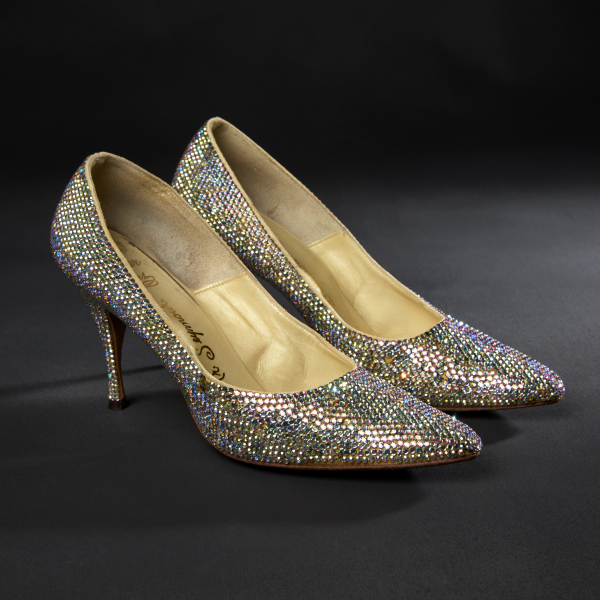
Here we see the classic pump shape, which emerges as a style in the mid-twentieth century. For high heels, we also see the introduction of the stiletto heel.
Aurora Borealis Rhinestone Pumps, Mr. Seymour Shoes (ca. 1955-70) and Quinn Enterprises (twentieth century), Haverhill, Massachusetts, and Portland, Maine, ca. 1955-64. Rhinestones, leather, acrylic. Gift of Stuart Weitzman.
1980-1990
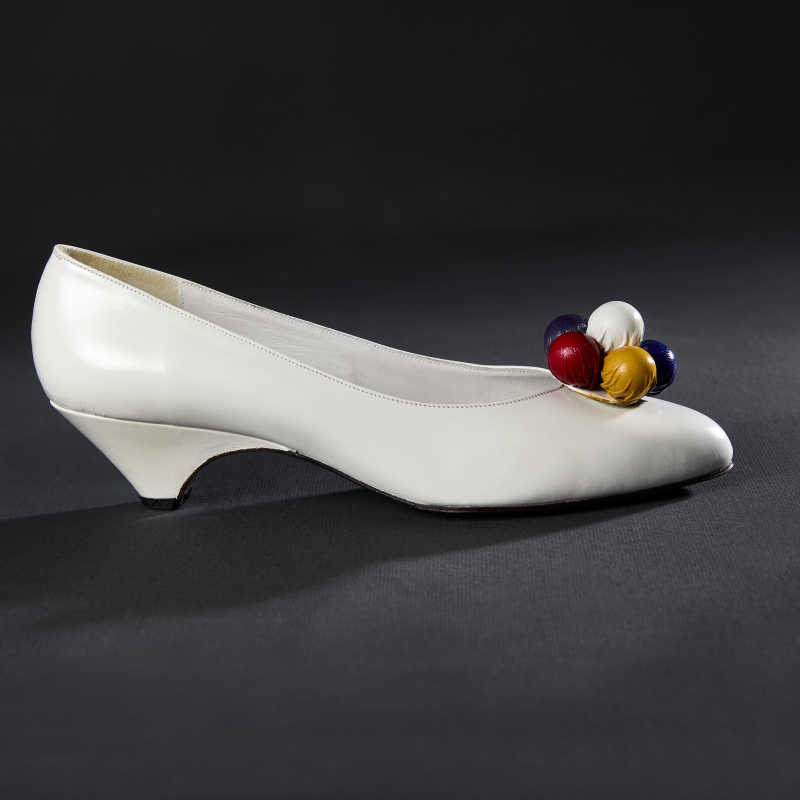
The latter decades of the twentieth century often looked back to the whimsy of the 1940s but with a modern boldness. The use of primary, bright, and saturated colors alongside graphic blacks and whites gained popularity in both men’s and women’s footwear at this time.
“Gumball” Kitten Heel Flats, Stuart Weitzman for Mr. Seymour Shoes, New York, New York and Spain, ca. 1980. Leather, wood, acrylic, synthetic fiber, cotton. Gift of Stuart Weitzman.
1990-2000
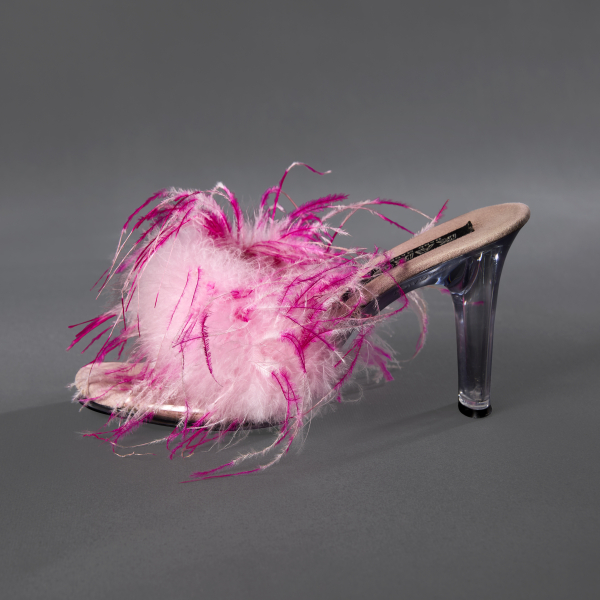
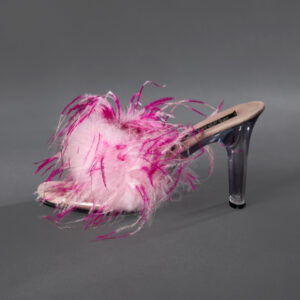
These shoes, though covered in bright pink marabou, are a quintessential profile of the millennium—very high heel, thin sole, and a single toe strap. The clear acrylic heel in various shapes also became incredibly popular.
Shoes, Karo’s Shoes, Inc. (founded 1996), United States, 1990-2000. Acrylic, suede, marabou feathers, vinyl. Gift of Stephen K. Desroches. Shoe generously sponsored by Margaret McNeill.
2010-2020
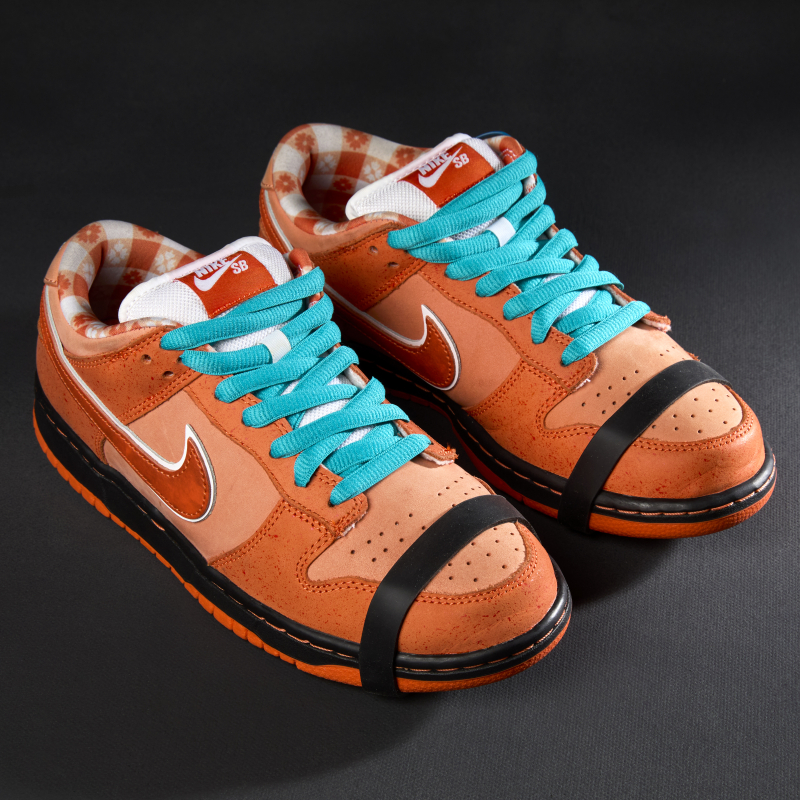
Though the popularity of sneakers soared in the 1980s, they have reached the point of cultural saturation where sneakers are now seen at almost any occasion and worn by anyone.
SB Dunks Low “Orange Lobster” Sneakers, Nike (founded 1964) and CNCPTS (founded 1996), Eugene, Oregon, and Boston, Massachusetts, December 2022. Leather, rubber, nylon, foam, cotton. Museum Purchase.
2020 – present
As we face social, environmental, and global challenges, we are looking for new materials and systems to combat the damage the fashion industry causes and to redefine footwear with accessibility, sustainability, equity, and inclusion in mind. As such, the shoes of today are looking to solve not only the problems we face now, but those we know we will face in the future.
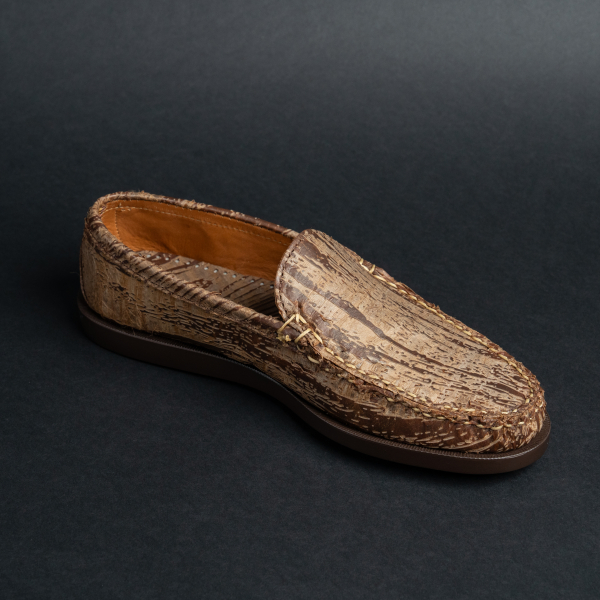
Contemporary designers are harnessing novel and exciting technologies to address issues of sustainability, providing alternatives to traditional animal-based shoe materials such as leather. Shoes and fashion accessories are being made from mushroom leather and pineapple fiber. The material of this shoe is from Marlborough-based laboratory SpadXTech, which has pioneered a new form of bio-leather that is grown from bacteria.
Sustainable Shoe, Rancourt & Company for SpadXTech, Lewiston, Maine, 2026. Bio-leather.
Gallery of Artful Objects
Fashion Feature: Heels
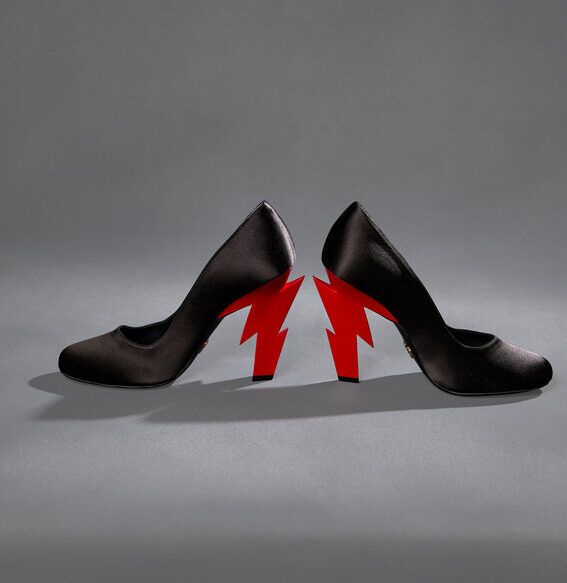
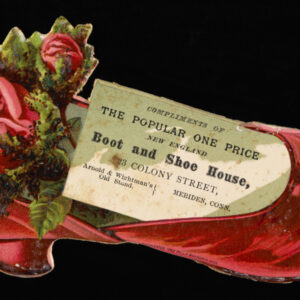
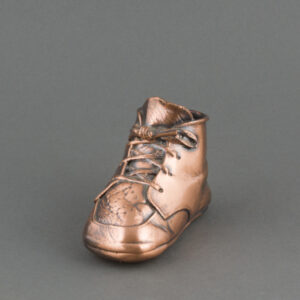
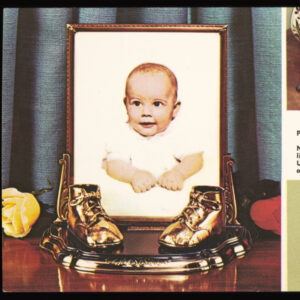
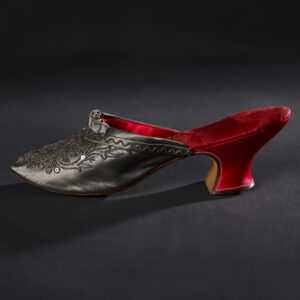
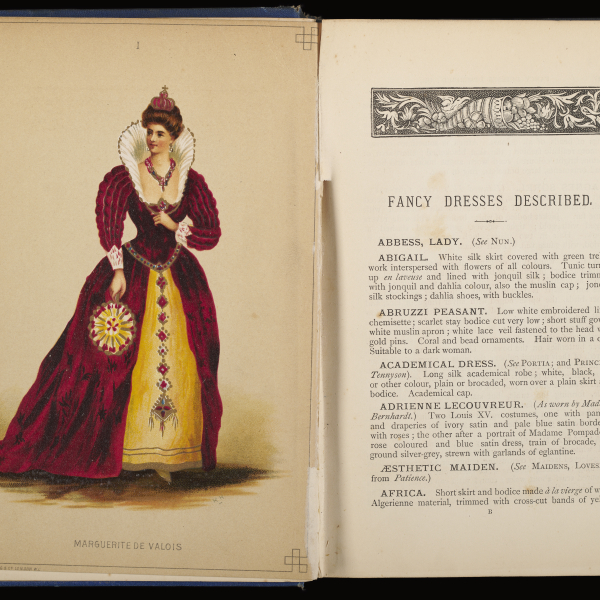
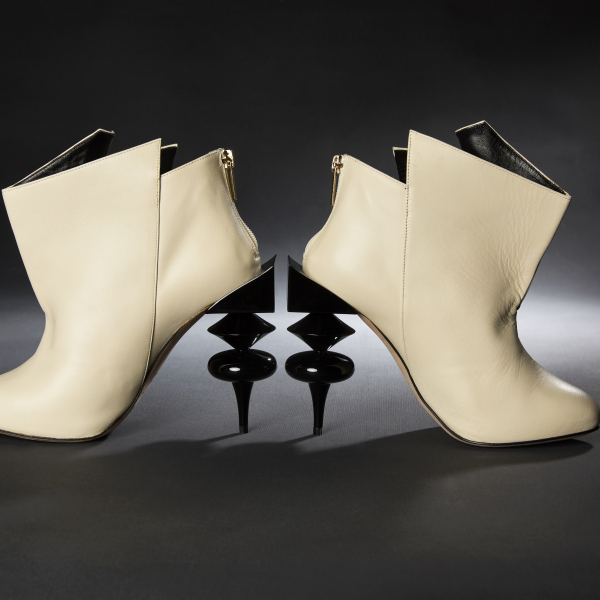
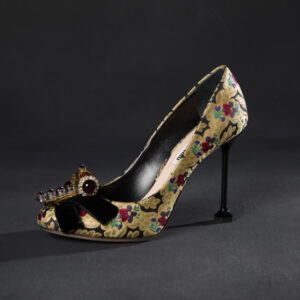
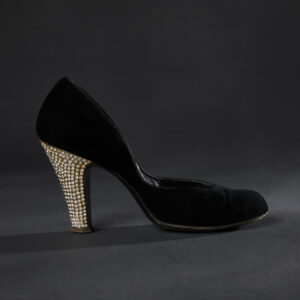
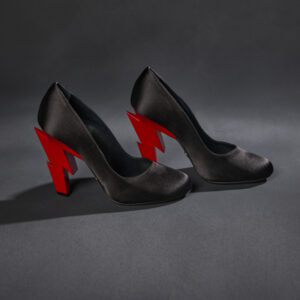
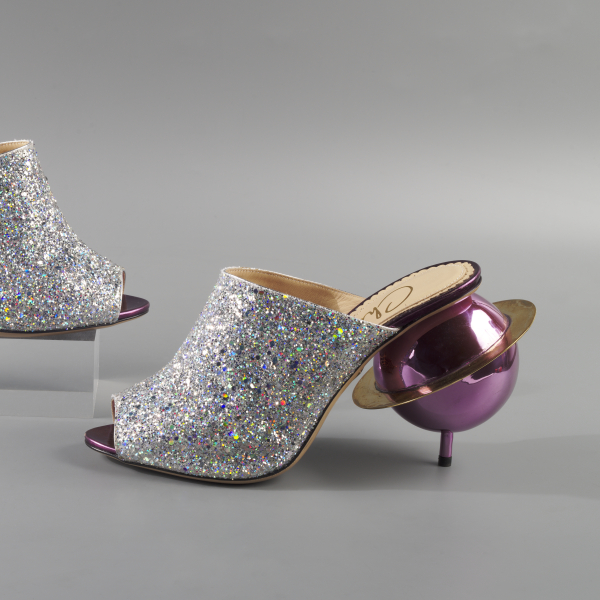
This section of the exhibition focuses on a particularly sculptural element of artful footwear, the heel. Architectural, whimsical, physics defying, meaningful, or eye catching, the heels in this feature make a statement.

In the Words of Designers
As part of our mission to tell the stories of shoe designers, retailers, workers, and wearers, past, present, and future, Historic New England sat down with nine individuals with ties to New England to create all new video oral histories. View one of these interviews here, or visit the Oral Histories theme to browse all of the interviews.
Chris Donovan
Selling Shoes with Light and Color
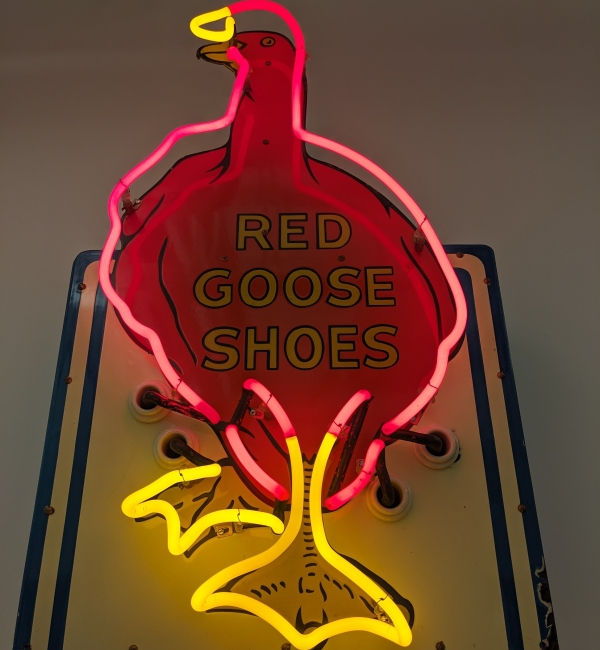
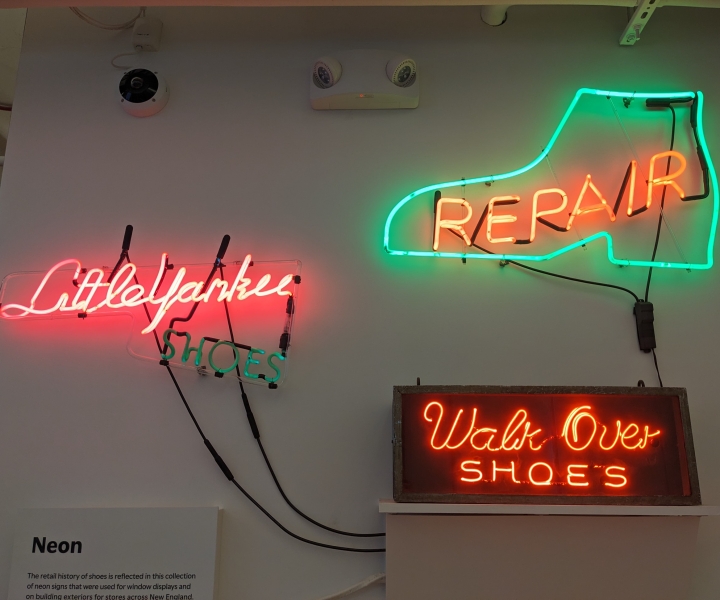
The retail history of shoes is reflected in this collection of neon signs that were used for window displays and on building exteriors for stores across New England. Red Goose and Little Yankee were children’s shoe manufacturers and provided these promotional signs to their retail outlets. Although cobblers are not as common as they once were, the Repair sign represents a moment in time when most people regularly had their shoes resoled and repaired. For Dave Waller, who started collecting neon signs at the age of nine, “The signs are a touchstone to something more, to a business and a neighborhood’s history. It’s through the stories that you start to see the commonalities…you start to see a lot about immigration and industry in Greater Boston.”